
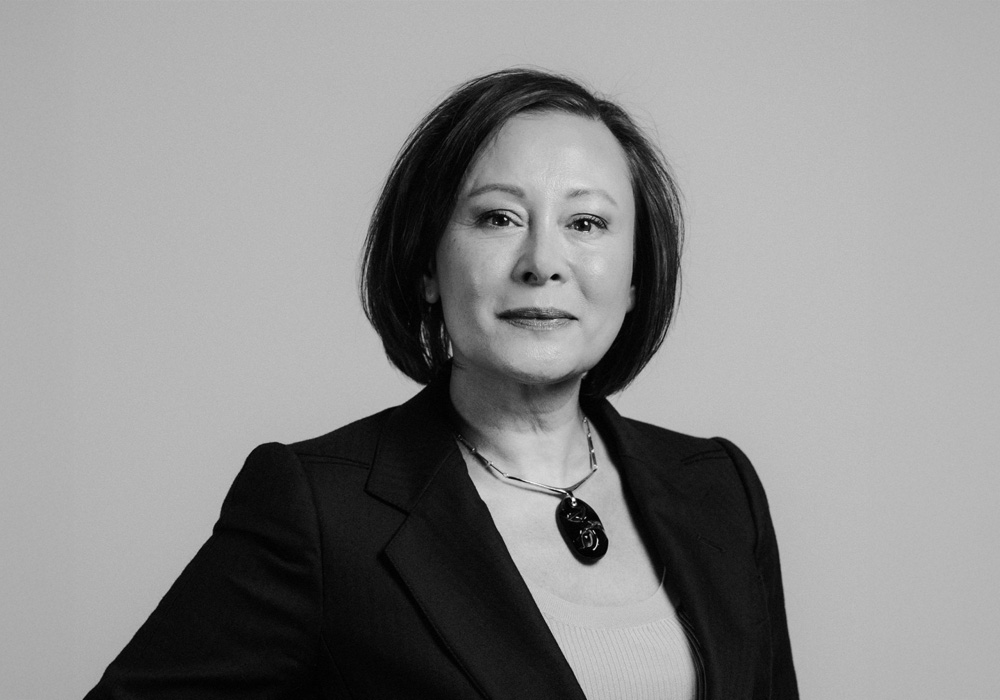
Public dollars and private philanthropy play a defining role in shaping Toronto’s arts ecosystem, especially as rising costs place increasing pressure on artists and cultural organizations. In this conversation, Kelly Langgard explains why belief in the arts must translate into sustained investment that supports creativity, equity, and cultural life across the city.
Arts funding discussions are often framed as a debate about discretionary spending, but this interview with Kelly Langgard is more practical and urgent. As Director and CEO of both the Toronto Arts Council (TAC) and the Toronto Arts Foundation (TAF), Langgard sits at the intersection of public investment, private support, and the everyday realities of artists trying to make work in one of North America’s most expensive cities. The conversation makes clear that culture functions like civic infrastructure. It shapes belonging, fuels local economies, and determines whether a city feels livable, legible, and connected.
The Toronto Arts Council and the Toronto Arts Foundation share a mission but operate with distinct mandates and funding models. TAC operates through an agreement with the City of Toronto to distribute municipal funds to artists and arts organizations. At the same time, TAF raises private funds to run strategic programs that expand access and strengthen the sector’s long-term resilience. The result is a complementary model, and Langgard argues that Toronto needs both parts working in concert, especially in an era defined by rising costs and fragile revenue.
Two organizations, one ecosystem
At the centre of Langgard’s explanation is a simple division of labour.
Toronto Arts Council
TAC allocates public funding across the city’s creative sector, supporting hundreds of organizations and independent artists through peer-assessed grant programs. The Council’s municipal funding base in 2025 is publicly documented at $29,221,946, reflecting the scale of taxpayer-backed investment moving through the TAC grantmaking system.
Toronto Arts Foundation
TAF operates as a charitable fundraising engine for programs that strengthen equity of access and audience connection. Langgard highlights initiatives such as Arts in the Parks and mentorship pathways that support artists facing systemic barriers, including youth, BIPOC, and LGBTQ+ artists. The Foundation’s signature fundraising event, the Mayor’s Evening for the Arts, anchors that work and continues to raise over $1 million annually to sustain programming.
Together, the Council and Foundation form a two-part structure: stable public funding that underwrites creation and presentation, and private fundraising that can be deployed strategically to expand access, build career pathways, and convene civic leaders around the value of the arts.
“Believe in Art” as a 50-year proof point
The Toronto Arts Council’s 50th-anniversary theme from last year's landmark celebration, “Believe in Art,” was framed as more than a slogan. Langgard describes it as an institutional memory of what sustained investment can do over time. TAC’s history frames the campaign to highlight how art contributes to a caring, vibrant city and to set the stage for future cultural growth.
In practical terms, the motto reinforces two ideas that recur throughout the interview:
- Long-term public funding changes what a city can produce artistically and what it can retain economically.
- Belief must show up as action, not rhetoric.
The conversation returns repeatedly to the compounding effect of support. It is easier to build ambitious work, maintain organizations, and develop talent pipelines when the baseline is reliable and the system rewards experimentation, not only commercial certainty.
The pressure points artists and organizations are facing
Langgard does not soften the realities. She speaks to an arts sector facing the same cost-of-living pressures as everyone else, compounded by space constraints that disproportionately affect artists: studio rents, rehearsal space, and venues. That picture aligns closely with her 2024 Maclean’s Magazine assessment, in which she described a national environment of rising operating costs, shrinking sponsorships, and funding pressures across the cultural ecosystem.
The underlying dynamic is structural. Many Canadian arts organizations operate as non-profits with limited reserves, balancing earned revenue, donations, and government grants. When any one of those legs weakens, the system tilts into survival mode. Langgard’s point in the interview is that survival mode drains creative risk-taking and leadership development, precisely when communities need meaning, joy, and social cohesion.
Public and private investment, with an explicit logic
One of the most valuable moments in the interview comes when Langgard addresses the relationship between public and private capital. She argues that substantial public investment attracts private participation by signalling legitimacy and stability. It also protects creative freedom, allowing artists to explore new territory without having to design work purely for market viability.
That logic reflects a broader policy conversation: public dollars can de-risk experimentation, and private dollars can expand reach and programmatic innovation. The model performs best when both grow together, rather than substituting one for the other.
Mentorship as a workforce strategy, not a nice-to-have
Langgard’s defence of paid mentorship is precise and operational. Mentorship works in the arts because careers often develop through networks, shadowing, and project-based learning rather than linear credential pathways. Paying both the mentor and the mentee recognizes the labour involved and removes practical barriers to participation, such as childcare and time costs.
This matters for equity and for sector capacity. Mentorship programs serve as workforce infrastructure for a field that has historically relied on informal gatekeeping. By formalizing and compensating the learning relationship, the ecosystem becomes more permeable to newcomers and underrepresented creators, and leadership pipelines become easier to build intentionally.
The Black Arts Program and the move from project cycles to stability
The interview’s discussion of the Black Arts Program highlights a key shift in how sustainability is built: operating support. Langgard explains that operating funding creates year-to-year stability, allowing organizations to plan beyond single projects and invest in systems, staff, and community relationships.
TAC’s Black Arts Annual Operating program is explicitly designed for Black-led, Black-focused, and Black-serving non-profit organizations in Toronto, with the stated intent of addressing barriers rooted in anti-Black racism and creating pathways to sustained support. The current application deadline is February 9, 2026.
Operating support also enables something less discussed but equally powerful: cohort effects. When organizations are funded in a stable stream, they can share practices, develop joint approaches, and build a community of practice that strengthens the overall field. Langgard frames this as one of TAC’s most effective models and a foundation for improving accessibility and connection across the funding ecosystem.
Arts as an industry, with measurable returns
Langgard advocates a language shift from “subsidy” framing to “investment” framing. Her argument is grounded in economic impact, cultural tourism, and the downstream benefits to main streets and neighbourhood vitality.
The “industry” case is well supported by national research. The Canada Council for the Arts estimates the culture sector’s contribution to Canada's GDP at over $63 billion, alongside significant employment impacts. Langgard makes the same essential point: when governments invest, communities benefit socially and economically through jobs, tourism, and a more connected city.
Mayor’s Evening for the Arts and the power of civic convening
The interview closes with a concrete example of what arts advocacy looks like when it is staged as civic convening. The Mayor’s Evening for the Artists took place on November 19, 2025, at The Carlu, bringing together political, business, and cultural leaders, as well as artists.
Langgard notes that the event is designed to show donors what their dollars enable, through live performances and showcased artists connected to mentorship, newcomer, and Black arts programs. It is fundraising, but it is also narrative strategy: a public demonstration of what a city supports when it supports its artists.
What this conversation leaves listeners with
Langgard’s final takeaway is ambitious and civic-minded: Toronto has the density of artists, institutions, and cultural plurality to model what sustained investment looks like in daily life. Her optimism is not abstract. It is rooted in what artists already do with limited resources, and in the belief that with better resourcing, the sector can deliver even more of what communities rely on art to provide: connection, imagination, and belonging.
A stronger city looks like a stronger cultural baseline
Toronto’s arts ecosystem is navigating a period in which costs rise faster than stability and the pressure to justify culture intensifies. This interview makes a credible case for the opposite approach: treat culture as foundational. Fund it as essential because it shapes the city’s identity, workforce pathways, tourism appeal, and civic cohesion.
The clearest thread is this: belief becomes real when it is budgeted, structured, and measured. In Langgard’s framing, the goal is not to preserve a fragile status quo. The goal is to build an ecosystem where artists can stay, grow, lead, and continue making the work that helps the city understand itself.