
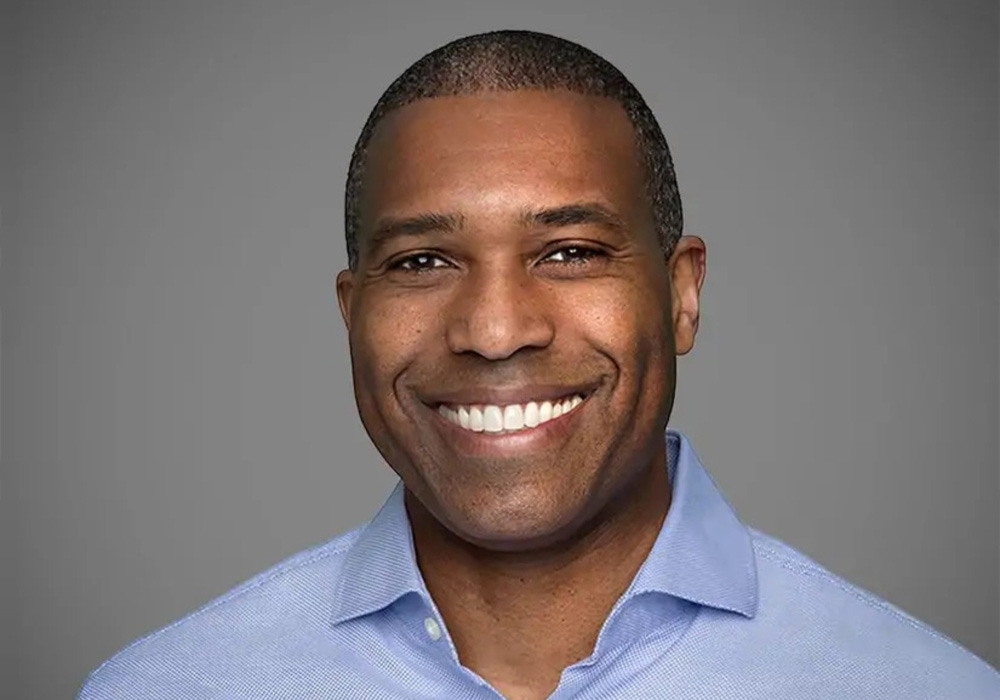
Tony West on leadership, culture, and corporate accountability
A conversation with Tony West at a turning point for Uber, exploring leadership during crisis, corporate culture reform, and what accountability looks like inside a global tech company. From rebuilding trust to advancing equity across borders, the discussion offers a rare inside view of values-driven leadership in practice.
In this engaging podcast episode, I sat down with Tony West, Senior Vice President and Chief Legal Officer at Uber, for a wide-ranging conversation about leadership under pressure, corporate culture, and the responsibility that global companies carry in moments of social reckoning. The interview took place at a pivotal time, coinciding with Uber Canada’s launch of Black Business Direct in partnership with the Canadian Black Chamber of Commerce, and against the backdrop of deeper conversations about equity, accountability, and trust.
West joined Uber in 2017, during one of the most turbulent periods in the company’s history. Hired as one of CEO Dara Khosrowshahi’s first senior appointments following a series of internal scandals, West arrived with a mandate that went well beyond legal remediation. His role was also cultural, ethical, and deeply human.
Entering a company in crisis
When West walked through Uber’s doors, the company was grappling with the fallout of the Holder Report, intense media scrutiny, and widespread questions about its internal values. Rather than retreating from the challenge, West described a moment that demanded clarity and resolve.
One of the earliest and most consequential decisions under the new leadership was the establishment of a simple but uncompromising North Star: do the right thing. West spoke candidly about how this principle became an operational framework rather than a slogan. Transparency, integrity, and accountability were positioned as non-negotiable standards guiding every decision, from compliance to people management.
He also addressed a common tension in startups. Rapid growth, he noted, often comes at the expense of internal balance. Uber’s early success had been extraordinary, but growth had been prioritized to such an extent that other values were pushed aside. Re-centring the organization required not only policy changes, but a redefinition of what success looked like internally.
Culture, diversity, and leadership by example
A defining moment in West’s early tenure was his decision to hire Tammy Albarrán, the author of the Holder Report, as his chief deputy counsel. The move was widely seen as symbolic, but West emphasized that symbolism alone was insufficient. What mattered was consistency between stated values and daily actions.
Throughout our conversation, West returned to a core belief: building the best teams inevitably leads to diverse teams. Diversity, equity, and inclusion were not framed as secondary initiatives or reputational shields, but as essential drivers of better decision-making and stronger business outcomes. West backed this position with data, but more importantly, with lived leadership practice.
Under his stewardship, Uber’s legal leadership team became majority female, with significant representation from women of colour. For West, this was not about optics. It was about assembling a leadership group capable of navigating complexity, operating ethically across borders, and reflecting the communities Uber serves.
Movement, access, and equity
One of the most compelling themes of the interview was West’s framing of Uber as a platform fundamentally about access. He described the company as enabling access to movement, economic opportunity, and local communities, regardless of who you are or where you come from. This idea of equitable access formed the philosophical bridge to Uber’s broader social commitments.
We discussed Uber’s global pledge to become an anti-racist company following the global reckoning on race in 2020. West was clear that this commitment required more than statements. It demanded listening, introspection, and measurable action. Uber’s approach, he explained, recognized that racism manifests differently across countries, shaped by local histories, power structures, and social dynamics.
In Canada specifically, this commitment has taken tangible forms. Beyond Black Business Direct, Uber has supported Indigenous awareness initiatives, engaged in truth and reconciliation education internally, addressed anti-Asian racism through allyship programmes, and partnered with organizations such as the Canadian Council for Aboriginal Business. Accountability, West stressed, includes public scorecards and ongoing evaluation, even after public attention fades.
A global perspective, grounded in experience
The conversation closed on a more personal note, touching on shared experiences of travel and work in Saudi Arabia, where West had previously spent time during his tenure as General Counsel at PepsiCo. The exchange underscored a broader point woven throughout the interview: leadership at a global scale requires cultural fluency, humility, and an understanding that values must travel as thoughtfully as products and services.
Why this conversation matters
Tony West’s reflections offer a rare inside view of how corporate transformation actually unfolds. Not through sweeping declarations alone, but through steady leadership, difficult hiring decisions, and a willingness to be held accountable long after the headlines move on. At a time when many organizations speak about values, this conversation offers a grounded examination of what it takes to operationalize them.