
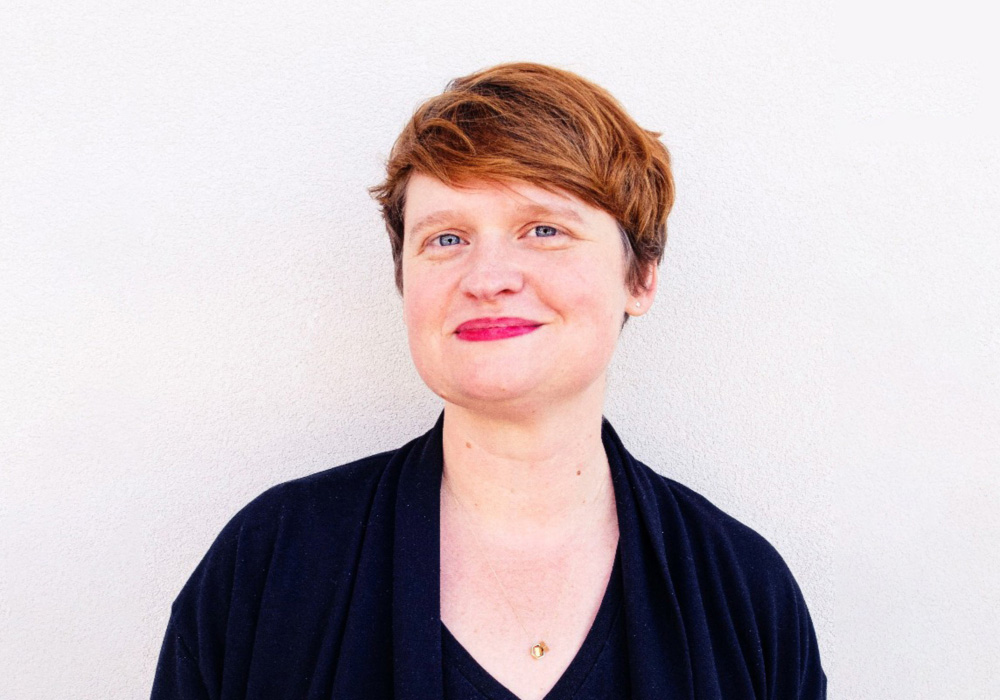
In this episode of World In My Eyes, I speak with Julia Cosgrove, Editor-in-Chief of Afar Media, about how travel journalism adapted during the pandemic, why representation and responsibility now sit at the centre of travel storytelling, and what it means to treat travel as a force for good. From Afar’s digital growth and editorial pivots to the enduring value of print and long-form narratives, our conversation explores how curiosity, empathy, and intention can reshape the future of travel media.
Travel stopped, but curiosity did not. In a moment when borders closed, and the world shrank to our living rooms, the best travel storytelling carried a different responsibility: to inform with empathy, entertain without escapism, and remind people that the world would still be there when it was safe to return.
That is the through-line of my conversation with Julia Cosgrove, Vice President and Editor in Chief of Afar Media. We spoke at a time when the travel industry was being forced to rethink everything at once, including audience needs, editorial purpose, and what “responsible travel” should mean on the other side of a global disruption. Julia’s perspective is grounded in the reality of running a small editorial team through crisis, while also holding a longer-term view of how travel media can shape a healthier, more inclusive travel culture.
A travel editor grounded at home
When Julia joined me from Northern California, she was living an unfamiliar reality: staying put. Based in Oakland, she described sheltering in place as a dramatic shift from her usual rhythm. In normal years, she spends a significant portion of her time travelling. Suddenly, she was home for the longest stretch she could remember.
I related to that adjustment immediately. Without planes, airports, and constant movement, the days take on a different texture. The absence of travel has its own kind of loss, but I also recognized the strange productivity that can emerge when time opens up. Our exchange set the tone for the interview: honest about the disruption, but focused on what the pause reveals.
A career crossroads that became a founding chapter
Julia’s path to Afar began at a moment of professional uncertainty. In 2008, she was considering leaving journalism when she met Afar’s founders, Greg Sullivan and Joseph Diaz. They had been inspired by a six-week trip to India to start an experiential travel magazine based in San Francisco.
Starting a print magazine in that era sounded risky, even irrational. Yet, Julia saw something rare: the chance to help build a new approach to travel storytelling and define a brand from the ground up. Listening to her describe that early moment, I kept thinking about how founders and editors often share the same instinct. When the world shifts, you either cling to the old playbook or you build a new one.
How Afar grew when travel came to a standstill
One part of our conversation that stood out was Afar’s audience growth during the pandemic. Julia credited that performance to a mix of groundwork laid before COVID and quick editorial adaptation once it hit.
In the two years leading up to the shutdowns, Afar had made strategic hires and invested attention in digital growth. When travel came to a standstill, the team dropped a carefully planned editorial calendar and pivoted quickly to an empathy-led approach, producing news and information people could actually use. Julia emphasized something many readers do not always see from the outside: the team is small, fewer than ten editors and writers, and the output depends on clarity, urgency, and relentless focus.
For me, this was one of the clearest takeaways of the interview. The travel brands that earned trust during that period were the ones that treated the audience’s anxiety and uncertainty as real, not as a temporary inconvenience.
Supporting hospitality and redefining the traveller’s role
I asked Julia about Afar’s hospitality issue, which occurred in the middle of the pandemic. It includes the Stay List, Afar’s annual selection of new hotels vetted by its editors and contributors, and it was already deep in production when offices shut down.
Julia described the logistical realities of completing a print issue remotely and spoke with pride about her team’s ability to deliver under pressure. Yet the deeper point was not production; it was purpose. Hotels and restaurants were being clobbered, and covering hospitality in that climate demanded more than the usual tone of excitement and discovery.
Julia brought the conversation to a principle that kept returning throughout our interview: travel as a force for good, and the traveller’s responsibility in making that real. She said the relationship between hosts and guests matters, and that travellers need to see themselves as “good guests” in a tangible sense: respectful, culturally aware, and mindful of the environmental footprint travel leaves. In her view, the industry’s recovery would depend on companies being proactive about what the following decade demands, rather than waiting to react to the next crisis.
Dreaming forward, with more inclusive voices at the centre
We also talked about Afar’s “Where to Go” issue, reframed as “12 places we’re dreaming of.” Julia explained that it is usually Afar’s biggest issue of the year, designed to spark planning and momentum. In this cycle, planning was impossible in any conventional way, but dreaming felt universal.
Julia described two kinds of longing. For some people, it was the desire to see family they had not seen all year. For others, the pandemic clarified priorities and intensified the feeling that if you have been delaying a major trip for years, safety permitting, you may want to stop postponing it.
Then we moved into a more direct conversation about representation, prompted by the cultural reckoning in the wake of George Floyd’s murder. Julia spoke plainly. Afar was too white, and it needed to change. For the package, the team intentionally reached writers whose voices had not been platformed before, resulting in a diverse set of contributors, some writing personal essays about returning to places they love, others writing about long-held dreams of destinations they still hope to see.
I appreciated how Julia framed this work. She did not position it as a one-time fix. She described it as ongoing, deliberate, and tied to decision-making power: who gets hired, who gets assigned, who edits, who decides what gets published.
Beyond the headlines: why “off-the-beaten-path” still matters
One of the most personal parts of the episode came when I shared experiences from my own travels, including how people reacted when I posted photos from Senegal. It reminded me how many audiences still carry a narrow, headline-driven image of entire regions, and how travel content can either reinforce that narrowing or challenge it.
I also shared a conversation I had in Algeria with a tour guide who assumed outsiders simply were not interested in visiting his country. That moment stayed with me because it showed how stereotypes not only shape the traveller’s imagination but also local expectations.
Julia responded by pointing to Afar’s early editorial DNA, which spent more time on destinations outside the typical American travel circuit. She expressed a desire to return to that approach, because places are always more complex than their headlines, and daily life continues through instability. In her view, travel creates perspective and empathy by revealing nuance, rhythm, and humanity that news cycles flatten.
Travel as education, in the most literal sense
We then shifted to one of the most meaningful initiatives connected to Afar: its youth travel and education program, grounded in the founders’ belief that travel expands opportunity. Julia said they have sent thousands of students, including youth from underserved communities, on domestic and international trips supported by curriculum on environmental conservation and cultural understanding.
Her examples were powerful. Students from Oakland seeing the ocean for the first time. Students travelling to places like Costa Rica, Belize, Cambodia, and Native American reservations in the Southwest. A group visiting Ai Weiwei’s studio in China. Another group, young men from New Orleans in the Son of a Saint program, travelling to Ghana during the Year of Return.
Julia also made a point that I found especially compelling: the real impact often shows itself after the trip, when students return home. They come back “supercharged,” starting clubs, reshaping their goals, and finding new ways to lead in their own communities.
Print, digital, and the case for long-form storytelling
To close the episode, I asked Julia about the print-versus-digital debate. She argued that print offers a respite from noise, a lean-back experience that suits travel storytelling, whether you are on a couch or on an airplane. Digital provides immediacy and utility, giving people information and answers when they need them.
But Julia also pushed back against the idea that digital must be short, shallow, or disposable. She believes long-form, well-reported stories still matter, whether they are ink on paper or pixels on a phone late at night.
I agreed. As publishers and storytellers, we can serve search-driven needs without letting analytics become the only compass. Julia’s point was sharper: the best media companies anticipate what readers need before readers can articulate it. That is where the unexpected story lives, the piece that draws you in because it opens a window you did not know you were missing.
What I took from this conversation
This interview with Julia Cosgrove reinforced something I have long believed. Travel media shapes more than itineraries. It shapes who gets seen, which places feel accessible, what “good travel” looks like, and how curiosity becomes empathy.
Julia’s message, threaded through every part of our discussion, was that the post-pandemic travel landscape needs intention. Better representation in storytelling. More accountability from brands. More responsibility from travellers. And a continued commitment to depth, because long-form reporting and thoughtful narrative remain among the strongest tools we have for expanding how people understand the world.