
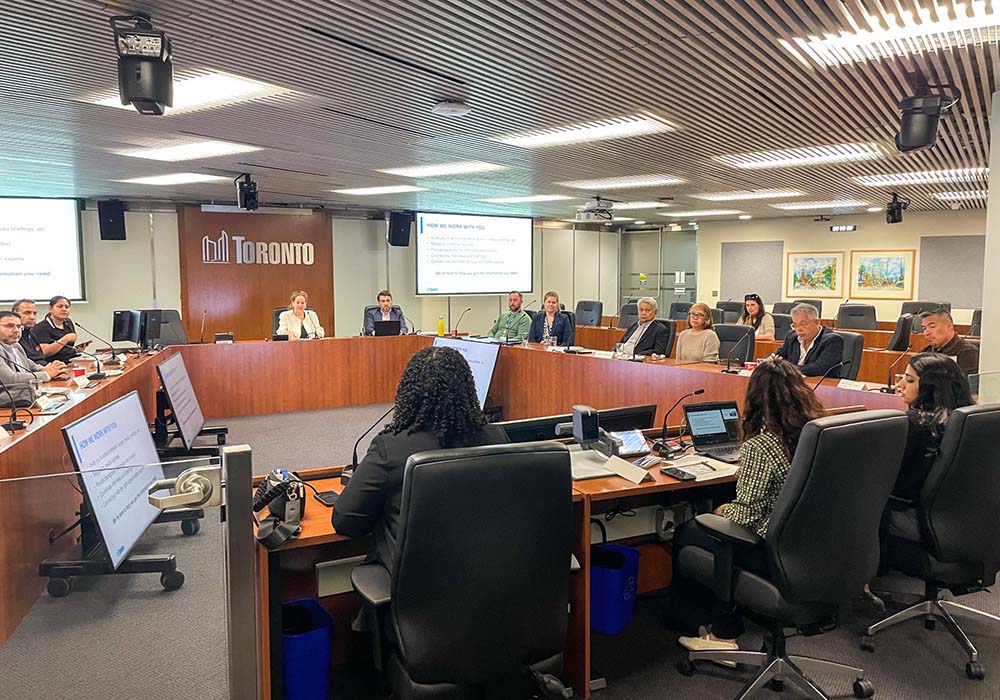
Culture Shox Media joined journalists from Toronto's ethnic media community for a candid meet-and-greet with the City of Toronto's senior communications leadership, including Chief Communications Officer Julia Oosterman and Director of Media Relations Russell Baker. The conversation covered multicultural storytelling, FIFA World Cup media inclusion, financial support for underrepresented outlets and the power of authentic community engagement. It was a meaningful step toward a more equitable media landscape in one of the world's most diverse cities.
Toronto holds a remarkable distinction. With over half of its residents born outside Canada and more than 200 languages spoken across the city, it stands among the most genuinely multicultural urban centres anywhere in the world. And yet, for decades, the storytelling infrastructure meant to serve that population, the press access, the advertising budgets, the institutional partnerships, has remained concentrated in the hands of a relatively narrow slice of mainstream media.
On Monday, May 25, 2026, Culture Shox Media was among a group of ethnic media journalists invited to Toronto City Hall for a meet-and-greet with the City's senior communications leadership. It was a room full of people who tell the fuller, more textured story of this city every day, sitting across from the people responsible for how the City communicates with all Torontonians. The conversation that followed was frank, substantive and long overdue.
Who was in the room
The City of Toronto was represented by some of its most senior communications figures. Julia Oosterman, who has served as the City's Chief Communications Officer since February 2025, led the session alongside Russell Baker, Director of Media Relations. Also present were several members of the City's broader communications and media relations team, representing areas including digital media and advertising. The journalists in attendance came from outlets that collectively reach hundreds of thousands of Torontonians across linguistic, cultural and regional communities that mainstream coverage routinely underserves.
What was on the table
The conversation quickly moved past formalities into territory that ethnic media journalists have been raising for years. Several themes anchored the discussion, each one reflecting a deeper structural question about how the City of Toronto chooses to engage with its most diverse constituencies.
The core issues that emerged included:
- Multicultural storytelling and the role ethnic media plays in reflecting Toronto's full population, not just its most visible demographics
- FIFA World Cup media inclusion and the need for the City to ensure that coverage of one of the most globally significant events in Toronto's recent history reaches all communities, in their own languages and through their own trusted outlets
- Financial support and procurement for ethnic and underrepresented media, moving beyond goodwill and toward tangible investment in outlets that serve communities mainstream budgets have historically overlooked
- Authentic community engagement and what it means for the City to build genuine, sustained relationships with media outlets that already have the trust of the audiences the City is trying to reach
Each of these points connects to a broader argument that ethnic media journalists have long been making. The communities these outlets serve are not niche. They are Toronto. Reaching them authentically requires working with the media they already read, watch and trust.
Why the FIFA World Cup matters so much right now
The timing of this conversation carries particular weight. Toronto is one of the host cities for the 2026 FIFA World Cup, and the scale of that event is difficult to overstate. Millions of visitors from across the globe will descend on the city. Torontonians from dozens of nations with direct connections to competing teams will experience the tournament with a personal intensity that mainstream sports coverage rarely captures. The opportunity to tell those stories richly, accurately and with cultural fluency is significant. So is the risk of getting it wrong.
Ethnic media outlets are positioned to do that work better than anyone. They have the language skills, the community relationships and the editorial judgment to cover the World Cup in ways that resonate with audiences whose excitement, pride and stakes in the tournament run deep. The question is whether the City and its partners will invest in making that coverage possible, or whether the event will once again be told primarily through a mainstream lens that leaves most of the city's population on the margins of the narrative.
Mayor Chow's moment and what it meant to the room
One of the more powerful threads in the conversation centred on Mayor Olivia Chow's recent decision to publicly read, on social media, the hateful and xenophobic messages she regularly receives online. The response in the room was unanimous. Everyone present saw it as an act of genuine courage, one that did something rare in political communications: it named the reality many racialized Torontonians live with every day, without softening the language or shielding the audience from its ugliness.
For a city that prides itself on diversity and inclusion, Mayor Chow's willingness to hold up a mirror to that ugliness was a powerful act of civic leadership. It created space for honest conversation about racial and cultural intolerance in a city that often prefers to celebrate its diversity without reckoning with the barriers that persist within it. That kind of leadership, willing to be uncomfortable in public in the service of a larger truth, is exactly what inspires trust with communities that have often had reason to be skeptical of institutional goodwill.
What meaningful inclusion actually looks like
Conversations like the one at City Hall are necessary, but they are also a starting point rather than a finish line. For ethnic media to function as genuine partners in the City's communications ecosystem, the relationship has to be built on more than access. It requires commitment at a structural level. The journalists in that room were not asking for charity; they were asking for fair consideration in the same procurement and advertising processes that direct significant public resources toward outlets that often reach a fraction of the communities ethnic media serves every day.
Meaningful inclusion in this context involves several interconnected commitments:
- Treating ethnic media outlets as credible, professional partners rather than supplementary outreach channels
- Building advertising and content partnerships that reflect the actual reach and influence of these outlets within their communities
- Ensuring that civic events, including the World Cup, are communicated through a wide spectrum of media voices from the planning stage, not as an afterthought
- Creating ongoing dialogue rather than one-off engagements, so that the relationship has continuity and trust can actually develop over time
The broader argument for investing in ethnic media
There is a practical case for what was discussed at City Hall, beyond the ethical one. Ethnic media works. It reaches communities with demonstrated loyalty, trust and engagement that mainstream outlets frequently struggle to replicate. When the City wants to communicate with newcomers, with Francophone Torontonians, with Black, South Asian, East Asian, Caribbean or Latin American communities, among many others, the most direct and credible path runs through the media those communities already rely on. That is not a secondary consideration; it is a communications strategy.
Culture Shox Media's own network reflects this logic. Platforms like AfroToronto.com and Toronto-Franco.com exist precisely because the communities they serve deserve editorial environments built around their experiences, their voices and their stories.
The advisory and content services Culture Shox Media offers to partner organizations are grounded in the same principle: authentic storytelling requires practitioners who understand the communities they are speaking to and with.
Where the road leads from here
The conversation at City Hall was a genuine step forward. The willingness of senior City communications leadership to sit with ethnic media journalists, listen directly and engage with the structural questions on the table signals something real. What matters now is what follows.
Culture Shox Media will continue doing what it has always done; which is telling the stories that matter to communities who deserve to see themselves reflected accurately, respectfully and with depth. We will also continue making the case, in rooms like the one at City Hall and beyond, that supporting ethnic media is not an act of generosity. It is an investment in a more complete, more truthful public conversation about who Toronto is and where it is going.
The story is bigger than any single meeting
Events like this media meet-up matter because they open doors, and open doors matter because of what can be built once people move through them. For the journalists in that room, the session represented something more than a networking opportunity or a chance to be heard by City Hall. It was a moment of recognition, however early and tentative, that the stories ethnic media tells are stories the city needs. The relationship between Toronto's institutions and its diverse media ecosystem still has significant ground to cover. But every substantive conversation, every procurement process that includes underrepresented voices, every editorial partnership built on genuine respect rather than tokenism, moves the needle.
Toronto has always been more interesting, more complex and more human than any single outlet can fully capture. The media landscape that tells its story should reflect that richness in full.
Culture Shox Media is committed to being part of building it.